
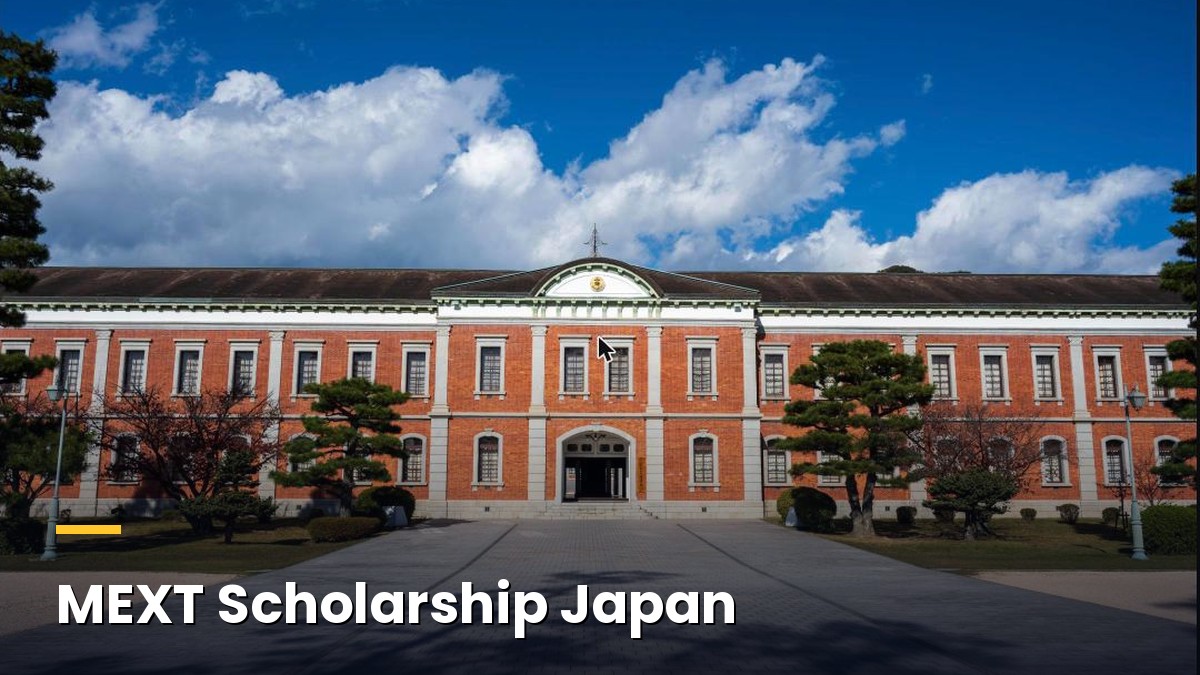
Japan’s Ministry of Education, Culture, Sports, Science and Technology (MEXT) runs one of the most generous government scholarships in Asia, and it covers undergraduate, master’s, and doctoral study. What confuses most applicants is that there are two separate ways in, each with its own selection process and calendar. Choosing the right track early can save you a full year of waiting.
What the MEXT Scholarship Pays in 2027
Both tracks pay the same benefits once you are selected. Tuition, entrance exam fees, and admission fees are covered, along with a round-trip economy flight to Japan. The monthly stipend depends on your level of study.
These are the published monthly rates for 2027 scholars:
| Category | Monthly Stipend |
|---|---|
| Undergraduate students | ¥117,000 |
| Research students (non-degree or preparatory) | ¥143,000 |
| Master’s degree students | ¥144,000 |
| Doctoral degree students | ¥145,000 |
Scholars studying in some designated regions may receive a small regional top-up. Stipends can also be cut or stopped if you miss classes or fail to make academic progress, so treat attendance seriously.
Embassy Track vs University Track at a Glance
The two routes reach the same scholarship but work very differently in practice. This comparison shows the main differences before we go into each one:
| Factor | Embassy Recommendation | University Recommendation |
|---|---|---|
| Who selects you first | Japanese embassy in your country | A Japanese university |
| Where you apply | Embassy or consulate | Directly to the university or its programme |
| Exams | Written tests plus interview | Usually documents and interview only |
| University placement | Secured after embassy screening | Built in from the start |
| Typical application window | April to June | Varies, often autumn to winter |
| Availability | Most countries with a Japanese embassy | Limited to specific universities and programmes |
How the MEXT Embassy Track Works
The Embassy Recommendation track is the main route for most international applicants, and it is open to nationals of countries with diplomatic relations with Japan. You apply to the Japanese embassy or consulate in your home country, which runs the first round of selection. Successful candidates are then recommended to MEXT, which makes the final decision.
Embassy Track Eligibility for Research Students
For the 2027 research student category, applicants must have been born on or after 2 April 1992, which puts the age cap at about 35. You need a bachelor’s degree (or expect one before arrival) and a research topic connected to your previous field. Undergraduate applicants face a much lower age cap, typically between 17 and 25.
The Selection Stages
The embassy process moves through several rounds, and each one eliminates candidates. These are the stages most embassies follow:
- Document screening: Your application form, research plan, transcripts, and recommendations are reviewed first.
- Written exams: Research applicants usually sit English and Japanese tests, while undergraduates take subject exams such as mathematics and science.
- Interview: Panels ask about your research plan, why Japan, your preferred universities, and your plans after graduation.
- Embassy recommendation: Successful candidates are forwarded to MEXT in Tokyo.
- University placement: Research students must secure a letter of provisional acceptance from a Japanese professor.
- Final MEXT decision: MEXT confirms selected scholars, typically early in the following year.
Embassy Track Timeline
MEXT runs a year ahead of most scholarships. For 2027 entry, most embassy deadlines fell between April and early June 2026, so anyone starting now is realistically aiming for 2028 entry. The cycle usually moves from application in spring, to exams and interviews in early summer, to placement letters in autumn, and arrival in Japan the following April or October.
The Japanese test rarely decides your fate for English-taught research. Its main purpose is placement, so weak Japanese is not a reason to skip the application.
How the MEXT University Track Works
Under the University Recommendation track, a Japanese university selects you directly and nominates you to MEXT. There is no embassy exam, and your university placement is decided from the start because you apply to that institution. The trade-off is availability: each university gets a limited number of slots, and many tie them to specific programmes.
Who the University Track Suits
This route works best for applicants targeting English-taught graduate programmes at major Japanese universities, many of which bundle MEXT nominations with admission. It also suits students whose home university has an exchange agreement with a Japanese institution, since some slots are reserved for partner schools. If you already have a professor in Japan willing to supervise you, ask whether their department has a University track nomination available.
University Track Timeline and Process
There is no single deadline, because each university and programme sets its own dates. Many graduate programmes open applications between autumn and winter for entry the following October, and some take applications almost a year in advance. Search the international admissions pages of your target universities for phrases like “MEXT University Recommendation” or “MEXT priority placement” to find open calls.
Be aware that a university nomination is not a final award. MEXT still reviews nominations and can reject candidates, so treat the university’s acceptance as one step rather than the finish line.
Which MEXT Track Should You Choose?
You can pursue both tracks in the same year, but you cannot accept two MEXT awards, and some universities ask you to declare other applications. Most applicants should start with the Embassy track, because it is open to nearly everyone and runs on a predictable calendar. Add a University track application if you find a programme or professor that offers one.
These questions will help you decide where to focus your energy:
- Do you have a specific programme in mind? If it offers a University track nomination, apply there as well as through the embassy.
- Are you strong in exams? The Embassy track rewards test performance, while the University track leans on documents and fit.
- Do you already have a supervisor? A professor who wants you can open a University track slot or make Embassy placement easier.
- Are you aiming for undergraduate study? Undergraduate places are mostly Embassy track only, with subject exams.
Documents You Will Need for Either Track
Requirements differ slightly between embassies and universities, but the core set rarely changes. Prepare these well before the deadline, since academic records and certified copies can take weeks to obtain.
- Application form: The official MEXT form, filled in English or Japanese.
- Field of study and research plan: For graduate applicants, a focused plan showing what you will research and why Japan.
- Academic transcripts and degree certificate: Official copies, with translations if needed.
- Recommendation letter: From your university’s dean, president, or academic supervisor.
- Medical certificate: On the official MEXT form, completed by a doctor.
- Language certificates: English or Japanese test results if you have them, as they strengthen the file.
- Abstract of thesis or published work: Expected for many research applicants.
Common MEXT Mistakes to Avoid
The most damaging error is a vague research plan, because it drives both the interview and your chances of finding a professor. Name a specific problem, method, and expected outcome, and connect it to work being done at Japanese universities. Another common mistake is waiting for embassy results before contacting professors, which leaves too little time to secure a provisional acceptance letter.
Age and degree dates also catch people out. Check the birth date cut-off in your year’s application guidelines, and confirm that your degree will be completed before you would arrive in Japan.
Final Thoughts: Plan a Year Ahead for MEXT
MEXT rewards applicants who plan early, because the Embassy track closes almost a year before you would arrive in Japan. Use the months before the next embassy call to sharpen your research plan, contact professors, and gather documents, then add a University track application if a programme offers one. Applying through both routes in the same year gives you two chances at the same award.
Whichever track you choose, the research plan and your fit with a Japanese supervisor will carry the most weight. Treat every stage, from the written exam to the placement letter, as part of one connected application rather than separate hurdles.
Frequently Asked Questions
Can I apply to both the Embassy and University tracks?
Yes, you can apply to both in the same cycle, but you can only accept one MEXT scholarship. Read each application’s guidelines, since some require you to disclose other MEXT applications.
Do I need to speak Japanese for the MEXT scholarship?
Not for English-taught graduate programmes, although Japanese skills strengthen your application. Many research students take a funded Japanese course after arriving in Japan.
What is the age limit for the MEXT research scholarship?
For 2027 entry, research applicants had to be born on or after 2 April 1992. The cut-off moves forward by one year each cycle, so check the date in your year’s guidelines.
When does the MEXT Embassy application open?
Most embassies publish their call between March and May, with deadlines in April to June. The exact dates vary by country, so watch your local Japanese embassy’s website from early spring.
Does the University track have higher acceptance rates?
It can, because the applicant pool is smaller and tied to specific programmes. Slots are also limited, though, and MEXT still has the final say on every nomination.
How much is the MEXT master’s stipend in 2027?
Master’s students receive ¥144,000 per month, and doctoral students receive ¥145,000. Tuition and round-trip airfare are covered separately.
