
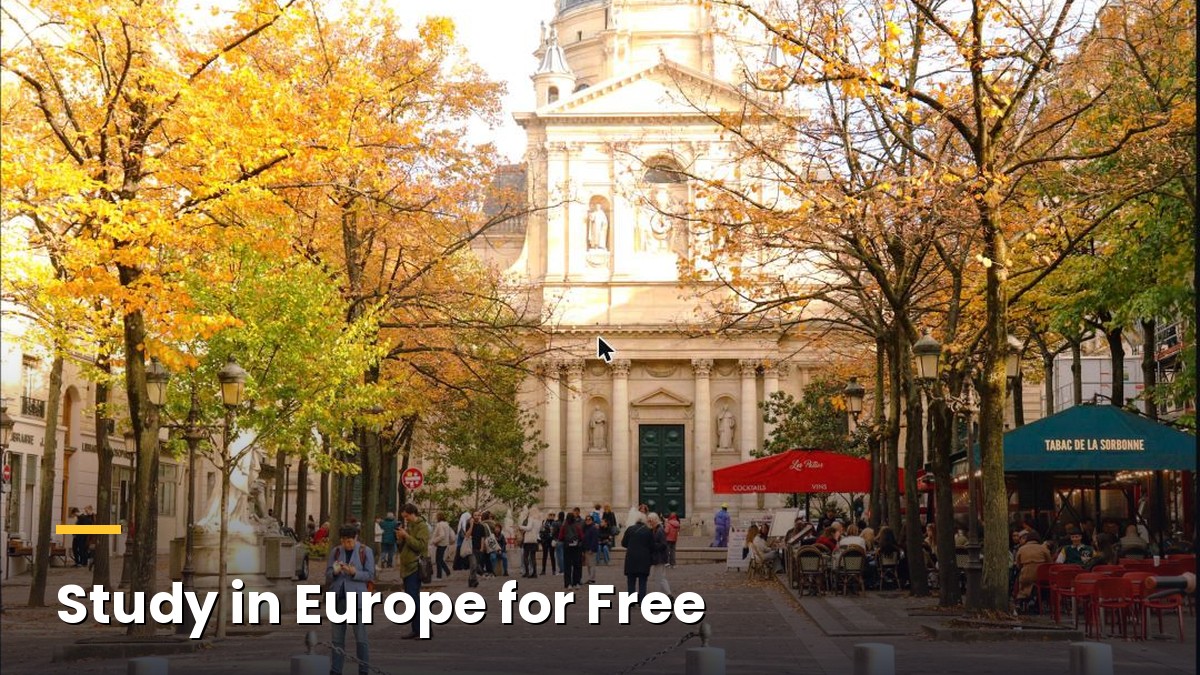
Free university education in Europe is real, but it is narrower than many social media posts suggest. Several countries that were once free for everyone now charge students from outside the EU, and “tuition-free” rarely means cost-free. This guide shows where tuition is still zero or close to it, and what you will actually need to pay.
What “Free” Really Means in Europe
In most cases, free study means a public university charges no tuition, but you still pay a semester fee, health insurance, and living costs. Visa rules also require you to prove you can support yourself, which often means showing more than €10,000 before you travel. Plan your budget around living costs, because they are the real price of a tuition-free degree.
This table summarises tuition at public universities for non-EU students in the main low-cost and free options:
| Country | Tuition for Non-EU Students at Public Universities | Main Catch |
|---|---|---|
| Germany | Free in most states | Baden-Württemberg and some universities charge; €11,904 blocked account |
| Czech Republic | Free in Czech-taught programmes | English-taught programmes charge fees |
| Iceland | No tuition | Annual registration fee and high living costs |
| Austria | Low fees, roughly €750 per semester | Not free, but far below UK or US levels |
| France | Reduced state fees, some universities waive them | Standard non-EU fees apply unless waived |
| Italy | Income-based, can drop to zero | Requires regional scholarship and income documents |
| Norway | Fees introduced for non-EU students from 2023 | No longer free for most international students |
Germany: The Biggest Tuition-Free Option
Most public universities in Germany charge no tuition to international students at bachelor’s or master’s level, and hundreds of master’s programmes are taught in English. You pay a semester contribution, usually between about €100 and €400, which often includes a regional public transport ticket. This combination of free tuition, English options, and strong post-study work rights makes Germany the most popular choice.
There are exceptions you should check before applying. The state of Baden-Württemberg charges non-EU students €1,500 per semester, and some universities elsewhere, such as the Technical University of Munich, have introduced fees for non-EU students. Private universities across Germany always charge tuition, so confirm a university is public before assuming it is free.
Germany’s Proof of Funds Requirement
For a student visa, most non-EU applicants must deposit €11,904 in a blocked account (Sperrkonto) for 2026, allowing withdrawals of €992 per month after arrival. You must open and fund this account before your visa appointment, and you cannot open one after arriving in Germany. A scholarship letter or a formal declaration from a sponsor living in Germany can sometimes replace the blocked account.
Czech Republic: Free If You Study in Czech
Public universities in the Czech Republic charge no tuition for programmes taught in Czech, regardless of your nationality. English-taught programmes charge fees, though they are often lower than in Western Europe. Some students take a one-year Czech language course before starting a free Czech-taught degree, which can pay off over a three- or four-year programme.
Iceland: No Tuition, High Living Costs
Iceland’s public universities do not charge tuition, even to non-EU students, but they collect an annual registration fee. The catch is the cost of living, which is among the highest in Europe and requires substantial proof of funds for a residence permit. Iceland works best for students with savings or a part-funded scholarship.
Austria: Low Fees Rather Than Free
Austria’s public universities charge non-EU students roughly €750 per semester, plus a small student union fee. That is not free, but over a two-year master’s it totals around €3,000, a fraction of UK or US fees. Austria also has strong public transport, relatively affordable student housing, and many English-taught master’s programmes.
France: Reduced Fees and University Waivers
French public universities charge non-EU students higher “differentiated” fees than EU students, but these remain low by international standards. Many universities use their right to waive part or all of the higher fee for non-EU students, so check each university’s policy. Campus France, the official agency, publishes current fees and scholarship options on its website.
Italy: Income-Based Fees and Regional Scholarships
Italian public universities set fees based on family income, so students from lower-income households can pay very little. Regional scholarship bodies such as DSU Toscana, ER.GO in Emilia-Romagna, and EDISU in Piedmont can waive tuition entirely and add a meal plan, housing, and cash support. You will need translated and legalised income documents from your home country, which take time to prepare.
Norway: No Longer Free for Most International Students
Norway was long the classic example of free study in Europe, but it introduced tuition for students from outside the EU, EEA, and Switzerland from autumn 2023. Many older articles still list Norway as free, so treat those claims carefully. Exchange students and some specific programmes may still be exempt, but most degree-seeking non-EU students now pay.
The Hidden Costs of a Tuition-Free Degree
Even with zero tuition, your first year abroad needs serious funding. These are the costs that catch most students off guard:
- Proof of funds: Germany’s €11,904 blocked account is the best-known example, and other countries set their own minimum amounts.
- Visa and residence permit fees: Usually payable at application, and not refunded if refused.
- Health insurance: Required for enrolment and visas, often €100 or more per month for public cover.
- Accommodation deposits: Landlords often ask for two or three months’ rent up front.
- Document costs: Certified translations, apostilles, and courier fees for original certificates.
- Application fees: Some platforms, such as Uni-assist in Germany, charge per application.
Part-time work can help after you arrive, since most EU countries allow students to work a set number of hours per week. Do not rely on it for your first months, though, because finding a job without the local language takes time.
How to Apply to a Tuition-Free European University
Application routes vary by country, but the general process looks similar across Europe. Follow these steps roughly a year before your intended start date:
- Shortlist public universities: Use official databases such as the DAAD International Programmes search for Germany or Study in Europe portals for other countries.
- Check language and degree requirements: Confirm the teaching language, accepted English tests, and whether your degree is recognised.
- Apply through the correct portal: Some German universities use Uni-assist, while others take direct applications.
- Receive your admission letter: Most programmes for winter intake send decisions between spring and early summer.
- Arrange proof of funds and insurance: Open your blocked account or gather sponsor documents before booking your visa appointment.
- Apply for your student visa: Book early, since embassy appointments in many countries fill up months in advance.
Deadlines for German winter-semester master’s programmes often fall between January and May. Many international applicants miss them by waiting until summer to start looking.
Final Thoughts: Budget for Living Costs, Not Tuition
Studying in Europe without tuition is still possible, especially in Germany, the Czech Republic, and Iceland, but the real cost is living expenses and proof of funds. Build your plan around that budget first, then shortlist public universities whose tuition rules you have confirmed on official sites. Be cautious with older articles, since countries like Norway have changed their policies in recent years.
Start about a year before your intended intake so you have time for applications, document legalisation, and a visa appointment. Pairing a tuition-free university with a scholarship or part-time income makes the plan far more realistic.
Frequently Asked Questions
Which European countries are free for international students in 2027?
Germany’s public universities are free in most states, Czech-taught programmes in the Czech Republic are free, and Iceland’s public universities charge no tuition. Austria, France, and Italy are low-cost rather than fully free for most non-EU students.
Is Norway still free for international students?
No, Norway introduced tuition fees for students from outside the EU, EEA, and Switzerland from autumn 2023. Exchange students and a few specific programmes may still be exempt.
How much money do I need to study in Germany for free?
For 2026, you need €11,904 in a blocked account to show you can cover living costs for a year. Budget extra for the semester contribution, health insurance, and accommodation deposits.
Can I study in Germany for free in English?
Yes, many public universities offer English-taught master’s programmes with no tuition. Bachelor’s programmes in English are fewer, and most are taught in German.
Do tuition-free universities accept students without IELTS?
Some do, especially if your previous degree was taught in English and you can show a medium of instruction letter. Each university sets its own rule, so confirm on the programme page.
Can I work while studying in Europe?
Most EU countries allow international students to work part-time during term, within set hourly limits. Earnings help with living costs, but you still need proof of funds for your visa.
